To see more ways we practice CVC words, see this post!
Showing posts with label Fluency. Show all posts
14 May 2015
New CVC Puzzles Freebie!
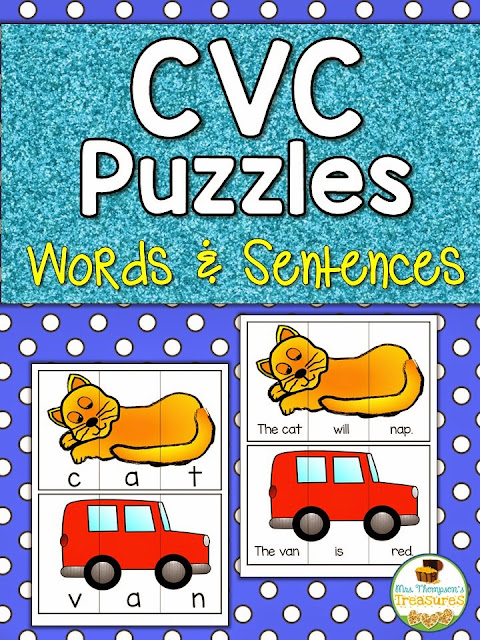
I love finding fun ways to practice CVC words with my little ones! I just finished these cute puzzles for my kids and I uploaded them here to my blog store to share with you! All you need to do is print, laminate and cut them out. Then you have a set of 16 puzzles that make a CVC word, and another set of 16 puzzles that make a simple sentence.
24 January 2015
Learn to Read With CVC
One of my favorite things to do is teach kids how to read! It used to be so intimidating, but I have grown to love it. There is nothing like watching a child read a sentence or a book for the first time and seeing the excitement and joy on their face!
My favorite 2 things to teach students as they are learning to read are CVC words and sight words. (If you'd like to read more about the best ways to teach sight words, you can read my post here.)
CVC (consonant-vowel-consonant) words are so great for students to put into practice all the sounds that they have learned. With so many words in the English language that don't sound like they look like they should, it is nice to have predictable words for students to learn.
When introducing CVC words, I like to do it in the context of word families. It groups them together in a way that forces repetition, which is a key to building fluency.
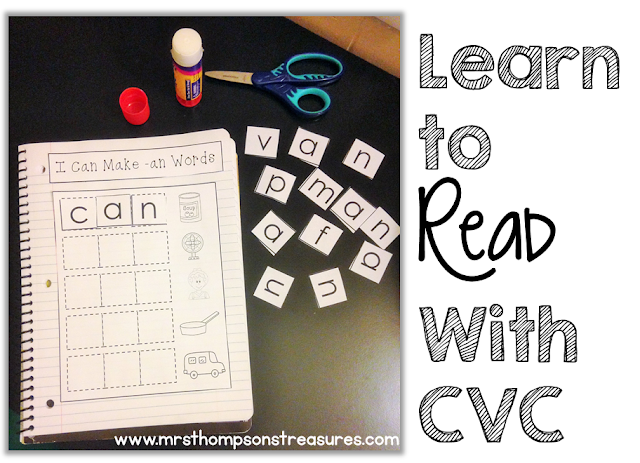
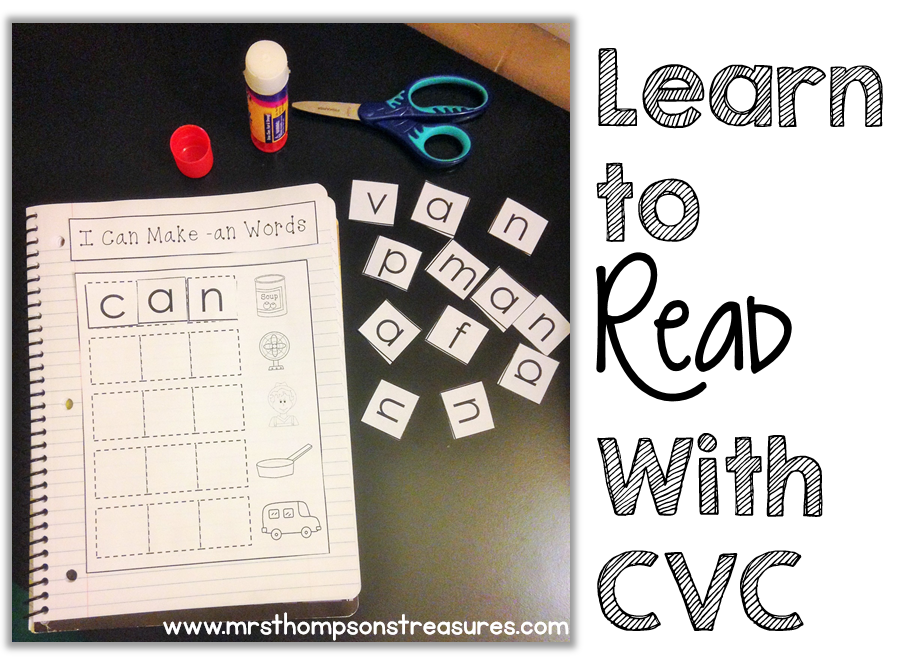
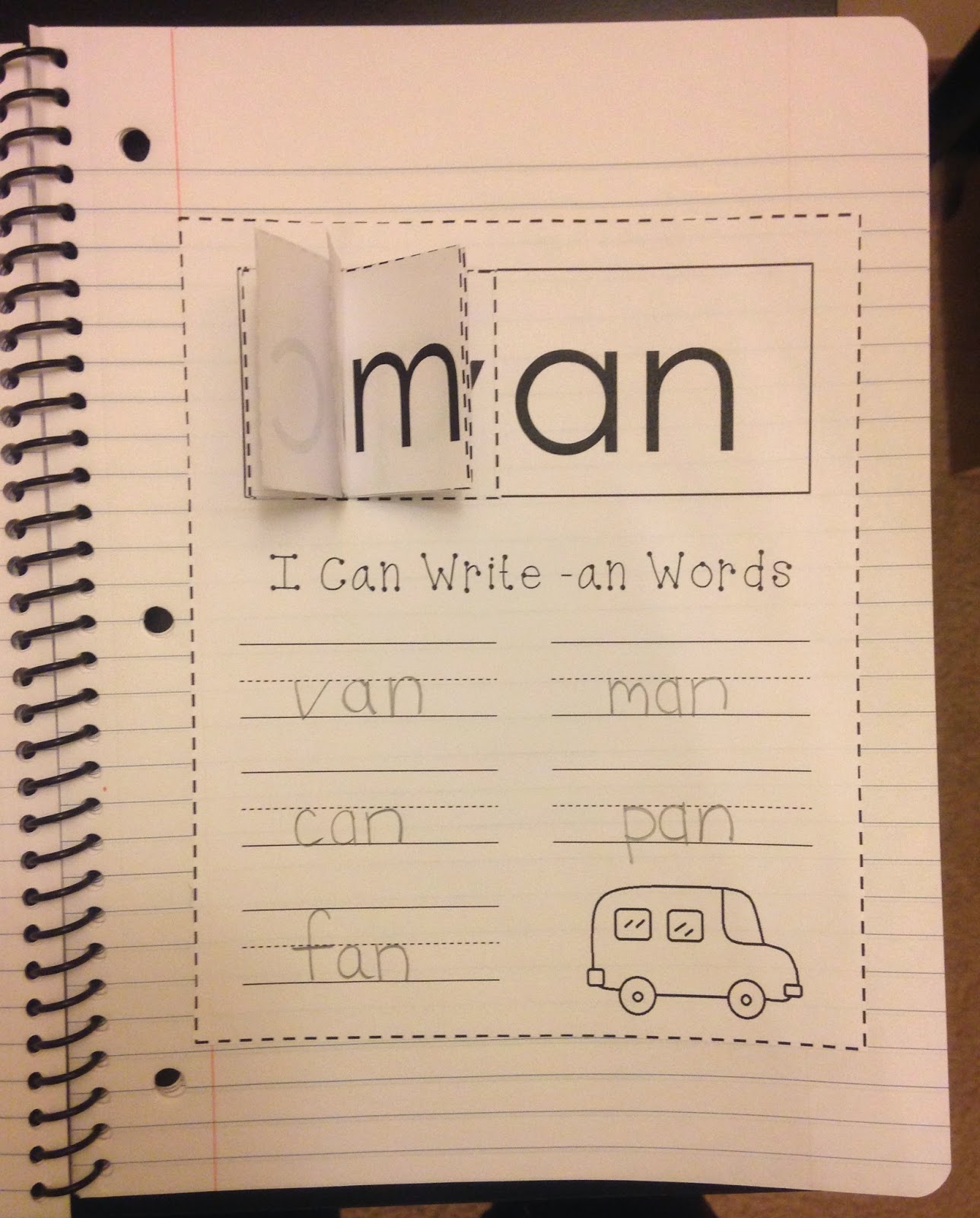
I use a CVC interactive notebook that lets students interact with the word families in different ways. First, we make the words from letter tiles.
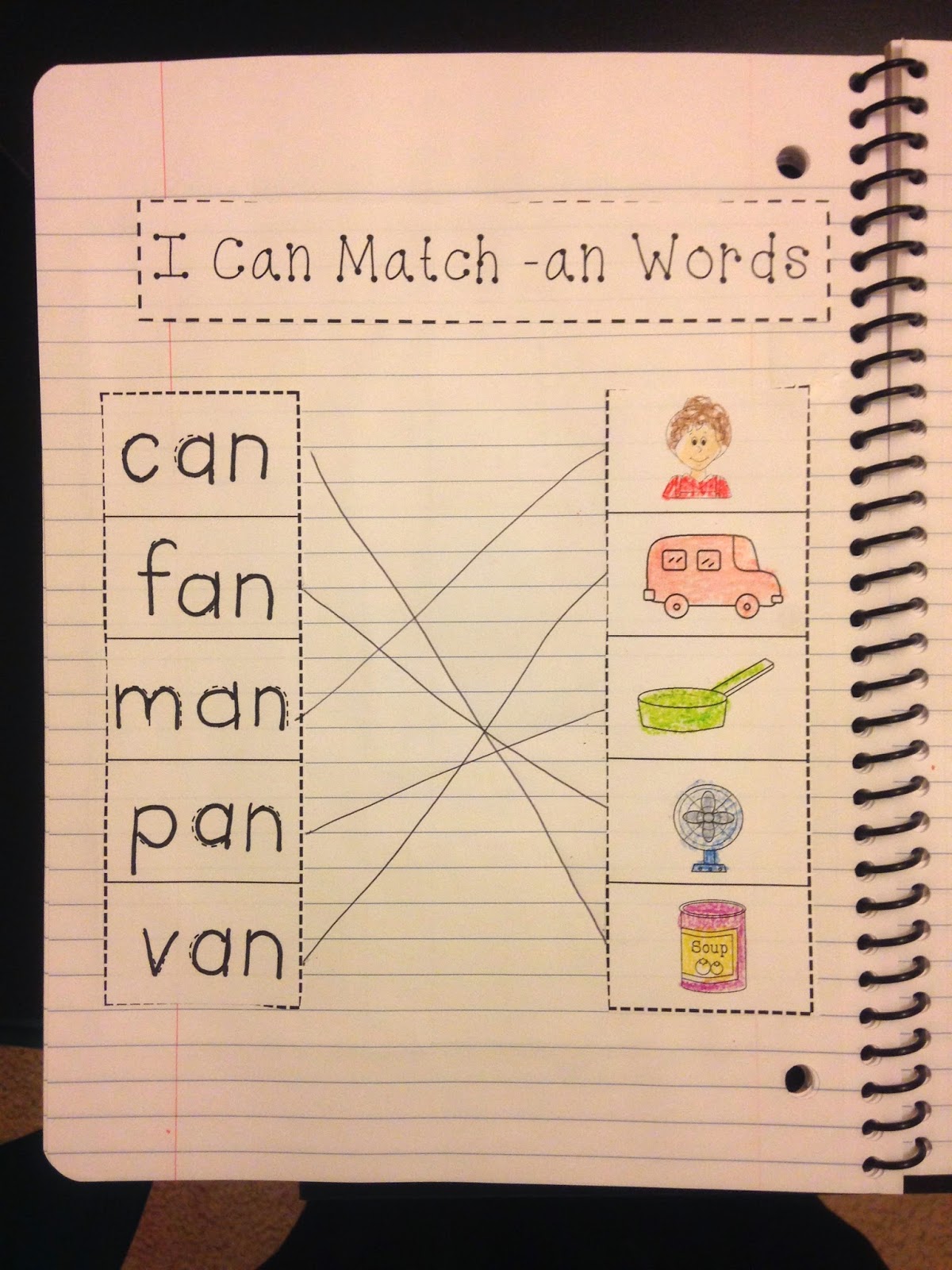
Then we move on to reading a word and matching it with the picture.
Next, we trace the word, read it, and match again.
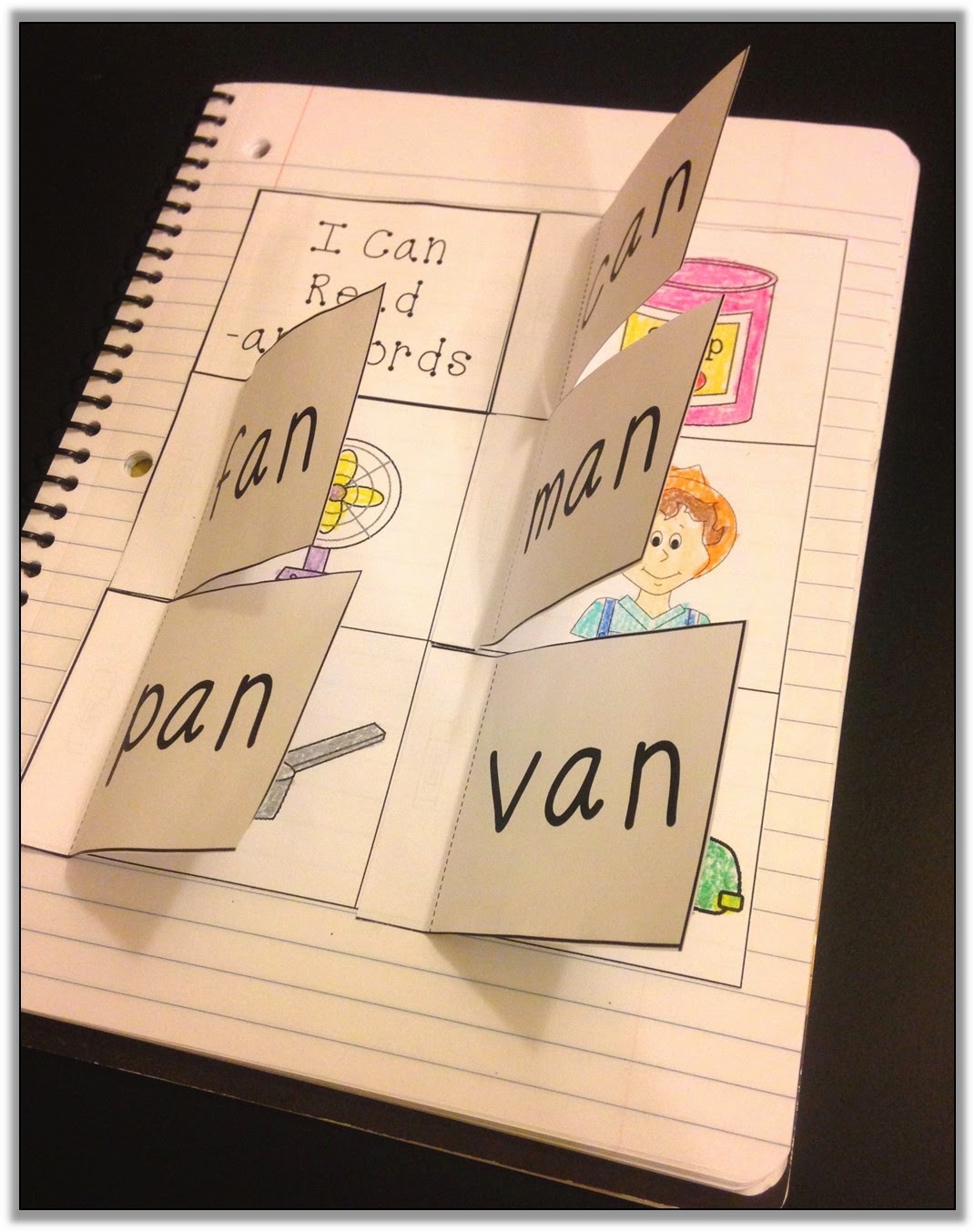
Finally we make a flip chart, practice reading, and write the words on our own.
Making reading fun is something I strive to do. So, I also love incorporating some mystery pictures using color by CVC words to review.
To get my CVC Word Families Interactive Notebook plus the CVC Word Family Mystery Pictures, you can find them HERE in my TpT store.
I have also just recently added a new CVCe Interactive Notebook, that takes the next step in learning to read by teaching students long vowels with silent 'e' at the end.
After learning how to decode CVC words and learning a few sight words (which make up 50-70% of most texts), students will have a great start on their path to reading!
26 August 2014
How to Build Fluency in Young Readers
Some kids learn to read and just begin to naturally read with fluency (speed, accuracy, and proper expression). Many kids, however, need some guidance and practice! Here are some things you can do to help build fluency in your young readers!
1. Model, Model, Model: Reading aloud to kids is the first step in building their fluency. Even before kids know the ABC's, they can learn what fluent reading sounds like. Read to your kids every day, even after they can read by themselves.
2. Reader's Theater: Find some scripts at or slightly above the students' reading level. Practice reading and performing the play - lines don't need to memorized, the focus is reading with proper speed and expression.
3. Re-Read & Partner Reading: Rereading short picture books again and again can build fluency and confidence. Even if the student has the words memorized, they are practicing the flow of the words. Reading with a partner is also a great way to get kids reading out loud and working together to build fluency. Students can take turns reading pages, or have a higher level reader read first, and then the lower level reader can repeat.
4. Fluency Strips - These are great for building up fluency as students practice reading short sentences. You can bind sentence strips together with a small ring to put in a literacy center, or you can turn them into a fun interactive notebook!
You can create your own by typing up some sentences and cutting them into strips, or if you'd like to get some that are already made, you can get my Fluency Strips Interactive Notebook here!
5. Another way to increase fluency and comprehension is to have students interact with the text they are reading. You can do this by asking questions about what the students are reading and have them actually show you in the text where they found the answer or information. This can be an oral activity, or you can use resources that are specifically designed for finding text evidence. Here is an example from a resource I created that has really helped my kids:
If you'd like to try some passages like this, you can get this FREE resource that includes several activities at different levels.
Above all, make sure students are given tasks that they can be successful at. They will gain confidence, and enjoy learning to read with fluency!
Subscribe to:
Posts (Atom)